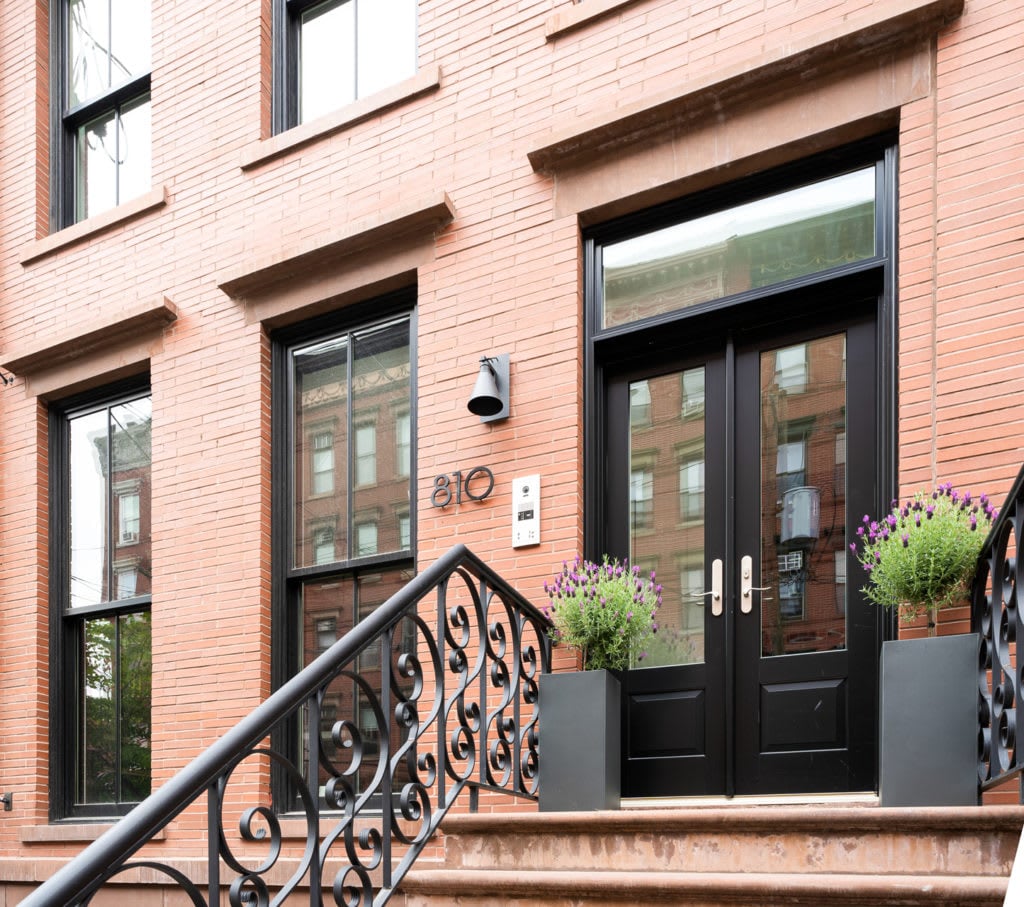
Two buyers are shopping the same week, both circling $950,000, both looking at one-bedroom-plus-den layouts with a Manhattan view. One is touring a unit at a Port Imperial tower with a doorman and a pool deck. The other is touring a pre-war conversion two blocks off Boulevard East with hardwood floors and a smaller building footprint. On paper, their price points are nearly identical. Underneath, they are buying into two different financial systems, and as of this year, New Jersey law finally requires each building to say which one out loud.
That distinction used to be invisible before a contract was signed. It is now, and it is the single most useful thing a Weehawken condo buyer can ask for before making an offer.
The Document That Didn't Exist Before Last August
New Jersey's reserve study requirement isn't brand new. Senate Bill S2760 required condominium, cooperative, and planned-development associations governed by the Planned Real Estate Development Full Disclosure Act to complete a professional reserve study starting in January 2024. What changed is how "adequate" got defined, and what boards now have to tell owners and buyers if they fall short.
On August 21, 2025, Governor Murphy signed S3992, which set the standard boards must now meet: a 30-year funding plan where the reserve balance never drops below zero. Associations that are behind can elect a temporary workaround, funding at 85 percent of that plan for up to five fiscal years, but only if they disclose it. Any community formed after that August 2025 date doesn't get the workaround at all. New associations have to fund at the full baseline standard from the day the board is elected, according to guidance on the amended law from Stone Building Solutions.
That single distinction, full funding from inception versus a temporary 85 percent election, maps almost exactly onto Weehawken's own geography.
Under the amended law, a board that elects the 85 percent option has to say so in writing, in type at least 20 points and bold, and if a special assessment is expected as a result, the notice has to state the year and the anticipated amount.
Before this year, a buyer touring a 40-year-old building had no legal mechanism to see that disclosure before signing a contract. Now they do, and most buyers simply don't know to ask for it.
Same Price, Different Bet
Weehawken's condo stock splits along the Palisades ridge itself. Above the cliff, along Boulevard East and through Uptown, the inventory leans toward pre-war conversions and older mid-rise co-ops, buildings like Gregory Commons, The Lenox, and the Cambridge. Below the cliff, at Port Imperial and Lincoln Harbor, the inventory is newer construction: The Avenue Collection, Riva Pointe, Avora, and the 282-unit tower at 1800 Avenue at Port Imperial, which broke ground with $210 million in construction financing and is delivering this summer.
| Port Imperial / Lincoln Harbor towers | Boulevard East & Uptown | |
|---|---|---|
| Typical building age | New and under-construction luxury towers | Pre-war conversions and older mid-rise co-ops |
| Example buildings | The Avenue Collection, Riva Pointe, Avora, 1800 Avenue at Port Imperial | Gregory Commons, The Lenox, Cambridge |
| Reserve funding posture under S3992 | Full baseline funding required from formation if the association organizes after August 21, 2025 | May elect the temporary 85 percent option for up to five fiscal years, with mandatory written notice |
| What to request before an offer | Initial reserve study and adopted funding plan | Most recent reserve study, any 85 percent election notice, anticipated assessment year and amount if disclosed |
A brand-new association at a building like 1800 Avenue at Port Imperial will likely fall under the full-funding requirement given its turnover this summer, which means its reserve math starts clean. An older association that has been collecting modest dues for two or three decades is exactly the kind of building the law was written for, and exactly the kind of building where a buyer benefits most from asking to see the paperwork.
None of this means older buildings are a bad bet. Plenty of well-run associations on Boulevard East have healthy reserves and no pending assessments. It means the price tag alone no longer tells you which category you're in. The disclosure does.
What To Actually Request Before You Sign
A buyer's attorney should be asking for these documents as a matter of course, not as an afterthought discovered during attorney review:
- The association's most recent reserve study and its adopted 30-year funding plan
- Any written notice that the board elected the temporary 85 percent funding option, including the disclosed year and amount of an anticipated assessment
- Board meeting minutes from the past 12 to 24 months, looking specifically for votes on capital projects or loans
- The resale certificate or estoppel letter, which shows current monthly fees, any arrears, and pending assessments
- The master insurance declarations page, including flood coverage on common elements
For financing, the reserve picture matters beyond the closing table. Lenders reviewing condo project approvals increasingly look at reserve adequacy as part of underwriting, so a building funding at the reduced 85 percent level with a disclosed future assessment can affect loan terms, not just monthly dues.
What the Price Segmentation Actually Reflects
Local market trackers through the first half of 2026 have put Weehawken's overall condo median somewhere in the high $800,000s to just over $1 million, depending on the source and the month sampled. That range collapses two very different markets into one number. Port Imperial and Lincoln Harbor listings run from roughly $800,000 for a one-bedroom into the low seven figures for larger units and penthouses. Boulevard East and hillside listings, including older co-ops and smaller condo conversions, tend to start lower and rarely reach the waterfront ceiling.
The median doesn't tell a buyer which side of the ridge they're standing on financially. The reserve disclosure does, and it does it in writing, with a specific dollar figure and a specific year attached when the board has elected the reduced funding path.
FAQ
Does this law apply to co-ops, or only condos? It applies broadly. The Planned Real Estate Development Full Disclosure Act, as amended, covers condominiums, cooperatives, and planned developments, and only associations with less than $25,000 in total common-area capital assets are exempt, a threshold low enough that it catches nearly every multi-unit association in Weehawken.
What if the building already completed a reserve study a few years ago? It still has to meet the current adequacy standard for its 2026 budget. A study done under the old rules may no longer satisfy the baseline funding test, so ask when the study was last updated and whether the board has confirmed it complies with the amended standard.
Is a small, 20 or 30-unit building exempt because of its size? Not based on unit count. The law is triggered by the dollar value of common-area capital assets, not the number of units, so even a modest building with a shared roof, elevator, or parking structure typically clears the $25,000 threshold.
Buying into Weehawken means choosing which side of the ridge fits your life, and now, for the first time, choosing which side of the reserve law fits your risk tolerance. If you want a second set of eyes on a specific building's financials before you write an offer, or you're preparing to list a Weehawken condo and want your association's disclosures in order before buyers start asking, Hoboken Living can walk through it with you.