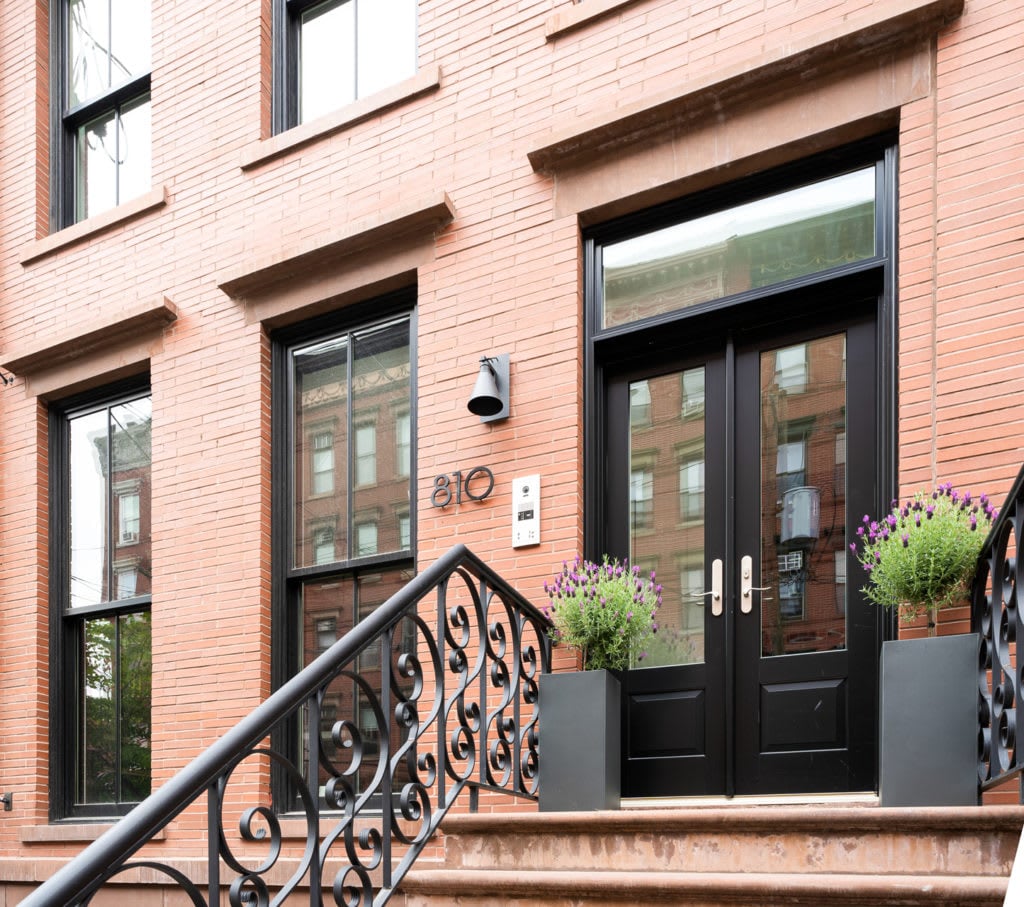
A Hoboken owner who pulled comps this spring and compared them to a neighbor's 2024 sale is looking at the wrong number. The sale price on that older closing statement is not what the same deal would net today. A rule change signed into law on June 30, 2025 quietly rerouted a five, six, or seven-figure line item from the buyer's side of the ledger to the seller's, and most homeowners still price their listing as if that shift never happened.
The thesis of this post is small and specific. In Hoboken, where the median sale is hovering around $974,500 to $999,000 as of mid-2026 and the Uptown and Downtown submarkets routinely clear $1.4 million, the closing table is now the single largest driver of your net proceeds after the sale price itself. Ignoring it is expensive. Planning for it is not.
The July 2025 rule that reset every Hoboken listing over $1M
New Jersey's supplemental realty transfer fee, long known informally as the "mansion tax," used to be a flat 1% paid by the buyer on any purchase over $1 million. On June 30, 2025, Governor Phil Murphy signed Bill S4666/A5804, and effective July 10, 2025 the fee became the Graduated Percent Fee, is now paid by the seller, and applies on a tiered schedule to the entire sale price. NJ REALTORS' official summary lays out the mechanics; the practical effect on Hoboken sellers is a step change in closing costs.
The brackets, as codified in the FY 2026 budget:
| Sale price | Graduated Percent Fee on entire price |
|---|---|
| $1,000,001 – $2,000,000 | 1.0% |
| $2,000,001 – $2,500,000 | 2.0% |
| $2,500,001 – $3,000,000 | 2.5% |
| $3,000,001 – $3,500,000 | 3.0% |
| Above $3,500,000 | 3.5% |
This sits on top of the standard Realty Transfer Fee sellers were already paying. Sellers must file Form RTF-1EE, the Affidavit of Consideration for Graduated Percent Fee, with any deed submitted for recording. A grace-period refund existed only for contracts fully executed before July 10, 2025 and recorded on or before November 15, 2025. That window is closed.
The residential classes swept in are Class 2 single-family homes and condo units, one-to-four-unit buildings, cooperative units, Class 3A farms containing a residence, and Class 4A commercial. Multi-family properties classified 4C are not affected.
What the cliffs actually cost in Hoboken price bands
The rate applies to the full sale price, not the amount over the threshold. That is the detail that catches sellers off guard, and it is where the cliff effects live.
A worked comparison at three price points a Hoboken owner might realistically face:
- $1,300,000 two-bed condo. Old regime: buyer paid $13,000, seller paid the standard RTF only. New regime: seller pays $13,000 on top of the standard RTF. A number that used to be someone else's line item is now yours.
- $2,100,000 brownstone floor-through or larger condo. The bracket steps to 2.0%. Seller now owes $42,000 in Graduated Percent Fee. Under the old flat 1%, the buyer would have paid $21,000. Same sale price, $42,000 subtracted from the seller's net where before there was zero.
- $2,600,000 full brownstone in the Bloomfield/Garden Street belt. At 2.5% on the full price, that is $65,000. Under the pre-July 2025 rules, the buyer's obligation would have been $26,000. The seller-side delta is $65,000, not $39,000, because the entire fee moved sides.
For homes above $3.5 million, which show up in the Uptown Waterfront and in a small tier of Hudson Tea and adjacent flagship buildings, the top 3.5% rate applies to the whole consideration. On a $4 million sale, that is $140,000 in Graduated Percent Fee alone. The New Jersey REALTORS chief executive Doug Tomson has publicly called the fee "onerous" for the state's housing market, and the trade group is lobbying for revision, but the schedule above is what closes deals in 2026.
Sellers can, by contract, negotiate for the buyer to reimburse some or all of the fee. In a market where inventory sits at roughly 1.9 months of supply, homes are trading at about 101.6% of asking, and days on market run in the high twenties to low thirties as of mid-2026, that lever exists but is not automatic. It is a pricing decision that has to be made before the listing goes live.
The oil tank line item that predates every rule change
The second closing-table surprise is older than the tax overhaul and just as capable of stalling a Hoboken sale. Buildings in Hoboken built before the mid-1970s frequently sat above a residential fuel oil tank, and many converted to gas without formally removing what was buried in the yard, under the sidewalk vault, or beneath a rear patio slab.
New Jersey buyers have a ten-calendar-day inspection window from contract, and their attorneys routinely order a tank sweep as part of due diligence. Sweeps use magnetic locators and, where reinforced concrete or driveway pavers are involved, ground-penetrating radar. Hoboken-active operators include ATS Environmental, which has performed more than 25,000 searches statewide, along with Brink's Tank Services, NJ Oil Tank Sweeper, and Villa Home Inspections.
The seller consequence is direct. When a tank is located during a buyer's inspection, most attorneys and mortgage lenders will not allow closing to proceed without removal and, if soil sampling flags contamination, remediation under NJDEP oversight ending in a No Further Action letter. Homeowners' insurance policies generally exclude leaking-tank remediation, and the industry-cited range for cleanup can start around $10,000 and climb well beyond that when groundwater is involved. Once you know a tank is there, the disclosure obligation follows you to the next buyer, so walking away from the deal does not make the tank go away.
The strategic move for a Hoboken seller in a pre-1975 building is to sweep before you list, not after you are under contract. It converts an unknown into either a clean report you can hand to the buyer's attorney or a scoped project you can complete on your own timeline.
The brownstone and pre-war condo findings that reopen negotiation
Hoboken's older stock trades at a premium for its architecture, and buyers pay that premium with an inspector on retainer. A handful of findings show up on inspection reports often enough that they function almost as a checklist for renegotiation. Green Apple Home Inspection's Kenneth Lee, quoted in a Brick Underground primer on brownstone inspections, notes that after a hundred-plus years, the mortar between stones in an original foundation often deteriorates into sand, creating moisture pathways into a basement that a finished drywall wall can hide.
Recurring items that reset a Hoboken buyer's ask on price:
- Foundation mortar and rear wall moisture. Especially in finished garden-level units where drywall obscures the original stone.
- Parapet and flat-roof drainage. Older brick parapets crack, and internal drains clog. Reports flag interior ceiling staining as a symptom.
- Facade brownstone and lintels. Spalling brownstone on stoops, treads, and window heads requires labor-intensive repair.
- Permit and Certificate of Occupancy gaps. Prior owners' unpermitted renovations, temporary CO's that were never converted to final, or kitchen and bath work absent from municipal records.
- Electrical service capacity. Panels sized for a 1980s kitchen, not a 2020s one.
- Aging steam or hydronic systems. Boiler age and asbestos jacket remnants in older mechanical rooms.
None of these are unusual, and none are deal-killing on their own. What matters for the seller is that each one, discovered during the ten-day inspection window, becomes a credit request against your net. Prep work done before listing sits on your books at your contractor pricing. The same work priced back at you by a buyer's counsel comes with a negotiation premium.
Pricing to the new net sheet, not the old comp
Put the three items above on the same page and the practical takeaway is this. A comp from 2023 or early 2024 at $2.1 million is not directly usable as evidence for pricing a similar Hoboken listing in late 2026. The same closing today moves roughly $42,000 out of the seller's column that used to sit in the buyer's, before any inspection credits or tank findings. In a market moving 143 sales in June 2026 versus 110 the prior year and clearing at 101.6% of asking, sellers still have the leverage to price into that reality. What they do not have is the ability to ignore it.
The most useful conversation to have before you list, with your agent and your real estate attorney together, is not "what will my home sell for." It is "what will I take home, and where in the schedule do I sit."
FAQ
Does the Graduated Percent Fee apply to condos? Yes. Class 2 residential includes individual condominium units, and cooperative units are named explicitly in the amended statute. Only apartment buildings classified 4C, meaning five or more residential units under a single ownership, are outside the scope.
Can a buyer contractually agree to pay it? The statute assigns legal responsibility to the seller, and a county clerk will not record a deed above $1 million without the fee paid. Parties can allocate the economic burden through contract language, but the recording remains the seller's obligation.
How much does an oil tank sweep cost in Hoboken, and who orders it? Sweeps are ordered by the buyer during their inspection period and are typically a few hundred dollars. A seller-initiated pre-listing sweep costs the same and removes the finding from the buyer's leverage position.
Are pre-1978 Hoboken units subject to lead disclosure? Federal lead-based paint disclosure applies to residential properties built before 1978, regardless of unit type. That obligation is separate from and older than the changes discussed above.
Nothing here is tax or legal advice. Every seller's schedule is specific to their contract, their attorney's guidance, and their CPA's read of the transaction. If you own a home in Hoboken and are thinking about listing in the next twelve months, Hoboken Living will walk you through a pre-listing plan that models the new net sheet, prioritizes the prep work that actually protects your price, and stages the home to sell into the market you are actually in.
Contact Us