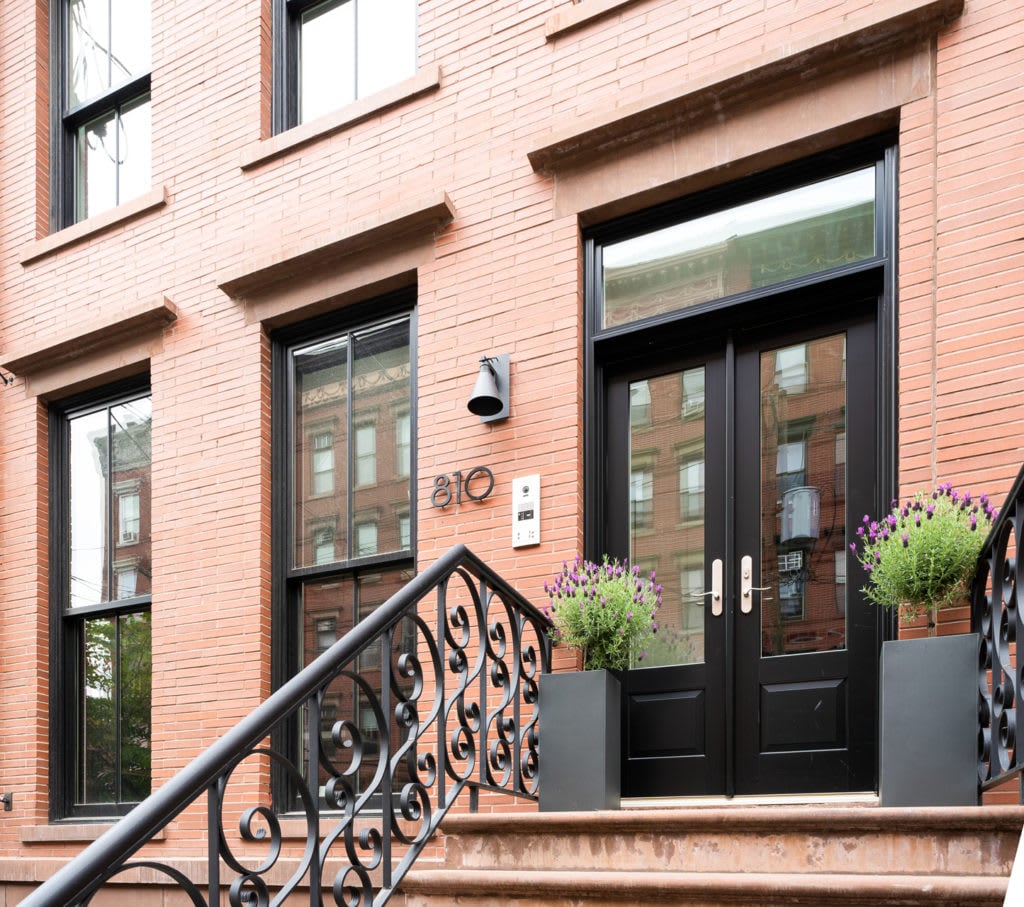
Every residential building that has broken ground in Guttenberg over the past two years shares one trait. None of the units are for sale.
Drive along Polk Street or Adams Street and the town looks like it is in the middle of a building wave, which it is. New six and nine story buildings with rooftop terraces, EV charging, and fitness rooms have gone up around what the developer calls Guttenberg's emerging arts district. For a buyer scanning listings and comparing Guttenberg to Hoboken or Jersey City, that visible construction reads as fresh inventory on the way. It is not. Every one of these buildings has come to market as luxury rental housing, and the pipeline behind them runs through 2028 without a for-sale unit in it.
That distinction matters more than it looks like it should, because it means the for-sale market a buyer is actually shopping in Guttenberg today is not the market the construction cranes suggest. It is a much older market, concentrated in a handful of large buildings from the 1970s, and understanding that gap changes how a buyer should read every price-per-square-foot number the town produces.
Who is building, and what they are building
The developer behind almost all of the recent activity is Echevarria Industries, and the pattern across its projects is consistent. The 36-unit, six-story building at 6810 Polk Street, built in 2025, leases one and two bedroom apartments from roughly $2,350 to $5,000 a month, with a rooftop terrace, fitness center, and garage parking one block from the arts district corridor. A nine-story sibling building at 68th Street follows the same template, with penthouse units carrying private balconies rather than deeds for sale. The flagship project carrying the "Arts District" name itself, a mixed-use development with retail space and a planned museum dedicated to Hudson County's industrial history, is projected for occupancy in winter 2026 or 2027, and it too is structured as rental housing.
The pipeline does not stop there. Echevarria entered a $125 million joint venture with Black Bear Asset Management and Bettina Equities to fund further multifamily development across Hudson County, including a seven-story, 50-unit rental building at 416 69th Street in Guttenberg slated to deliver in 2028, alongside an 80-unit companion project just over the line in West New York arriving in 2026. The financing behind these two projects alone includes a $23 million loan from Popular Bank and a $1.3 million loan from DR Bank, structured through Black Bear Capital Partners.
None of this is a criticism of the projects themselves. Rental development is filling a real need in a town this dense, and the arts district framing, tied to the existing Guttenberg Arts studio space on Jackson Street, gives the corridor an identity it did not have a decade ago. The relevant fact for a buyer is narrower: this is where Guttenberg's construction dollars are going, and it is not toward new condos.
Where a buyer actually lands
If new construction is not adding to the for-sale supply, the for-sale supply is still what it has been. The dominant name in that supply is Galaxy Towers, the three interconnected octagonal buildings on Boulevard East built in 1976, holding 1,075 units under a single condominium association managed by First Service Residential. As of early September 2026, listings across the complex showed a median list price near $393,500 and an average price of roughly $340 per square foot, with units sitting on the market considerably longer than a typical single-family sale.
Outside the towers, Guttenberg's for-sale inventory is thinner and more varied: small multi-family conversions, a scattering of rowhouses, and older walk-up buildings along the Bergenline Avenue side of town. As of July 2026, the town's overall median condo price stood at $374,500, with an average sale price of $391,738 and condos spending an average of 71 days on the market before selling. In a May 2026 reading, townhouse listings ran considerably higher, from roughly $699,000 to $950,000, and multi-family properties spanned an even wider range, from about $715,000 up past $2 million. Those three bands rarely move together, and because Guttenberg records so few closings in any given month, a handful of sales in one category can swing the town-wide median by tens of thousands of dollars without any real shift in the market underneath it. A single-month reading for June 2026 put the town's median sale price down more than 9 percent year over year, while a trailing three-month figure ending in May 2026 showed a median up over 7 percent for that stretch. Both numbers are accurate. Neither describes a market moving in one direction, because the transaction count behind them is small enough that the property mix, not the market, is doing the moving.
The HOA line that changes the comparison
The second layer to this, and the one that catches buyers off guard at the financing stage, sits inside Galaxy Towers' monthly fees. Association dues across the complex have ranged from $954 to $2,641 a month, and that range includes electric, heat, maintenance of common areas and building exterior, sewer, snow removal, trash collection, and water. A Galaxy Towers owner is not paying a separate utility bill on top of that number. It is already in there.
That structure makes a raw price-per-square-foot comparison misleading unless a buyer adjusts for it. A one-bedroom in the towers listed near $360,000 at roughly $340 per square foot can look like better value than a similarly sized unit in a newer building in a neighboring town, where the HOA line might run lower on paper but excludes utilities entirely. Once a buyer adds back the electric and heat bill that the second unit's owner pays separately, the actual monthly cost gap narrows or disappears. The reverse is true for someone comparing a Galaxy Towers unit against a Guttenberg rowhouse or small multi-family property, where there is no HOA at all and the entire cost structure runs through separate utility accounts and, eventually, a roof and boiler the owner maintains alone.
None of this makes one option better than another. It means the comparison a buyer is actually running, tower unit against rowhouse against a unit in Jersey City or Weehawken, needs the utility line normalized before the square footage math means anything.
What this means when Guttenberg is one option among several
A buyer weighing Guttenberg against Hoboken, Jersey City, or Weehawken is often assuming that a town's visible construction activity maps to its for-sale pipeline. In Guttenberg right now, it does not. The buildings going up along Polk Street and Adams Street will house renters for years before any of that inventory, if it ever does, becomes ownership stock. The for-sale market a buyer is shopping today runs almost entirely through a single 1976 complex and a thinner layer of older multi-family and rowhouse product, and the price a listing quotes only tells part of the story until the HOA line has been checked for what it already includes.
That is a useful thing to know before comparing a Guttenberg listing sheet to one from a few blocks over in West New York or Weehawken. The number on the page is real. What it is actually measuring depends on the building behind it.
If you are weighing a unit in Guttenberg against something in Hoboken, Jersey City, or Weehawken, and want the dues, the taxes, and the actual carrying cost worked out side by side before you make an offer, Hoboken Living can walk through the numbers with you building by building.